


What Is Singapore’s Role in the Global Economy?
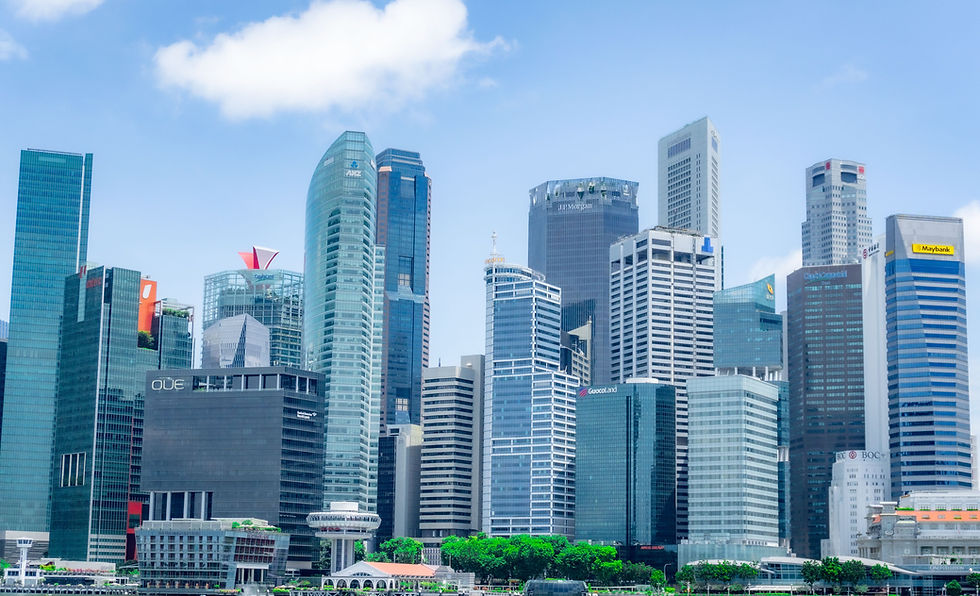
Singapore is a small country, but it plays a significant role in the global economy.
Located at the centre of major Asian trade routes, Singapore has developed into an international hub for trade, finance, logistics, investment and global business.
But what exactly is Singapore's role in the global economy?
1. A Major Global Trade Hub
Singapore is one of the world's most connected trading hubs.
In 2025, Singapore's total merchandise trade reached approximately S$1.4 trillion, while services trade increased by 3.3%. Its extensive network of trade agreements also connects businesses in Singapore to markets across Asia and beyond.
Singapore's trade volume is also significantly larger than its domestic economy. The Ministry of Foreign Affairs has noted that Singapore's trade volume is around three times its GDP, reflecting how deeply integrated the country is with global trade.
2. A Global Shipping and Logistics Hub
Singapore's geographical location has helped it become one of the world's major maritime hubs.
In 2025, the Port of Singapore handled a record 44.66 million TEUs of container throughput. Singapore is also connected to more than 600 ports worldwide and remains one of the world's busiest container transshipment hubs.
Around 90% of Singapore's container throughput was for transshipment in 2024, highlighting its role as a connection point for goods moving between different parts of the world.
This logistics network supports international supply chains across Asia and beyond.
3. A Financial Centre Connecting Global Capital
Singapore is also an important financial centre in Asia.
Its financial sector supports activities including banking, asset management, insurance, capital markets and financial technology. The Monetary Authority of Singapore (MAS) focuses on maintaining a robust and resilient financial centre while strengthening Singapore's connections with global financial partners.
This makes Singapore an important location for businesses and investors that need access to capital, financial services and Asian markets.
4. A Major Destination for Foreign Investment
Singapore plays an important role in international investment flows
.
According to UN Trade and Development (UNCTAD), Singapore received approximately US$143.4 billion in foreign direct investment (FDI) inflows in 2024, making it the largest FDI recipient among developing Asian economies that year.
International companies use Singapore not only to serve the local market, but also as a base for regional headquarters, investment, research and development, and management activities.
5. A Gateway to Southeast Asia
Another important role of Singapore is connecting international businesses with the wider Southeast Asian market.
Singapore has an extensive network of Free Trade Agreements, Digital Economy Agreements and other economic partnerships. These arrangements are designed to strengthen market access and economic connections with other countries and regions.
For multinational companies, Singapore can therefore function as a regional base from which they coordinate activities across Asia.
6. A Hub for Global Supply Chains
Singapore's role goes beyond simply moving goods from one country to another.
The country's manufacturing, logistics, trading, financial and professional services sectors are closely connected to international supply chains.
Singapore has developed capabilities in industries such as semiconductors, pharmaceuticals, specialty chemicals and aerospace, while its port, airport, financial centre and trading infrastructure connect different global economic flows.
This combination allows Singapore to participate in different stages of international business, from manufacturing and logistics to financing and regional management.
Why Does Singapore Matter to the Global Economy?
Singapore's importance comes from its ability to connect different parts of the global economy.
Its role can be summarised through several key functions:
Trade hub connecting businesses to global markets
Maritime hub supporting international shipping and logistics
Financial centre connecting capital and financial services
Investment hub attracting international companies and capital
Regional headquarters base for companies operating across Asia
Supply-chain hub supporting manufacturing, trading and distribution
Singapore's small domestic market means its economy is highly dependent on international connectivity. This has encouraged the country to maintain strong links with global markets and position itself as a trusted and connected business hub.
Final Thoughts
Singapore's role in the global economy is much larger than its geographical size might suggest.
Through trade, finance, investment, logistics and regional connectivity, Singapore acts as an important link between Asia and the rest of the world.
For international businesses, understanding Singapore's role in the global economy also helps explain why the country continues to attract companies looking for a base in Asia.



Comments